
Indian plugs are not accepted everywhere. The UAE, UK, Singapore, Malaysia and Sri Lanka use Type G; most of continental Europe uses C, E or F; the USA and Japan use A and B; Australia uses Type I. An adapter only changes the plug shape. Most phone and laptop chargers also take 100-240V, but check the label.
Updated November 2026 · HappyFares
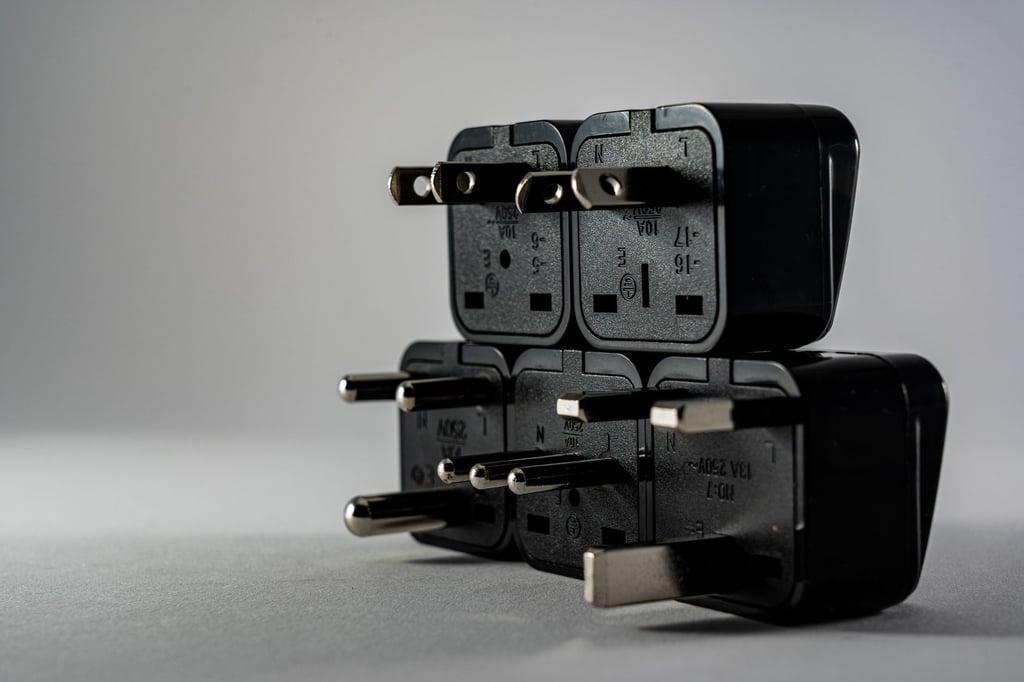
Packing for a trip abroad? A wrong plug is a small problem that can leave you with a dead phone on day one. Here is what each popular destination uses and what to pack.
What plugs and voltage does India use?
India’s mains supply is 230V at 50Hz. Sockets are mainly Type D (three round pins, for small devices and chargers) and Type M (a larger three-pin type for heavy appliances). Type C two-round-pin plugs are also common because many imported devices come with them, though they can sit loosely in a Type D socket.
So when you travel, the question is not only whether a plug fits, but whether the voltage and frequency at your destination suit your devices.
Which adapter do you need for each popular destination?
Figures below come from the World Standards plug and voltage guide, last updated July 2025 for most countries (January 2026 for Australia).
| Destination | Plug type | Voltage and frequency |
|---|---|---|
| UAE | Type G | 230V, 50Hz |
| United Kingdom | Type G | 230V, 50Hz |
| Singapore | Type G | 230V, 50Hz |
| Malaysia | Type G | 230V, 50Hz (often about 240V in practice) |
| Sri Lanka | Type G | 230V, 50Hz |
| Thailand | Types C and O; sockets are often hybrids that also take A and B | 230V, 50Hz |
| Nepal | No official standard; Type C most common, then D and M | 230V, 50Hz |
| USA | Types A and B | 120V, 60Hz |
| Japan | Types A and B | 100V; 50Hz in the east (such as Tokyo), 60Hz in the west (such as Osaka) |
| Australia | Type I | 230V, 50Hz (often about 240V in practice) |
| Continental Europe | Types C, E and F in most countries (Switzerland uses J, Italy uses L, Denmark uses K) | 220-240V in most countries, 50Hz |
The practical takeaway: one Type G adapter covers the UAE, UK, Singapore, Malaysia and Sri Lanka. The USA and Japan share the same flat-pin family. Europe is a different shape again, and the UK is not part of the Type C, E, F group.
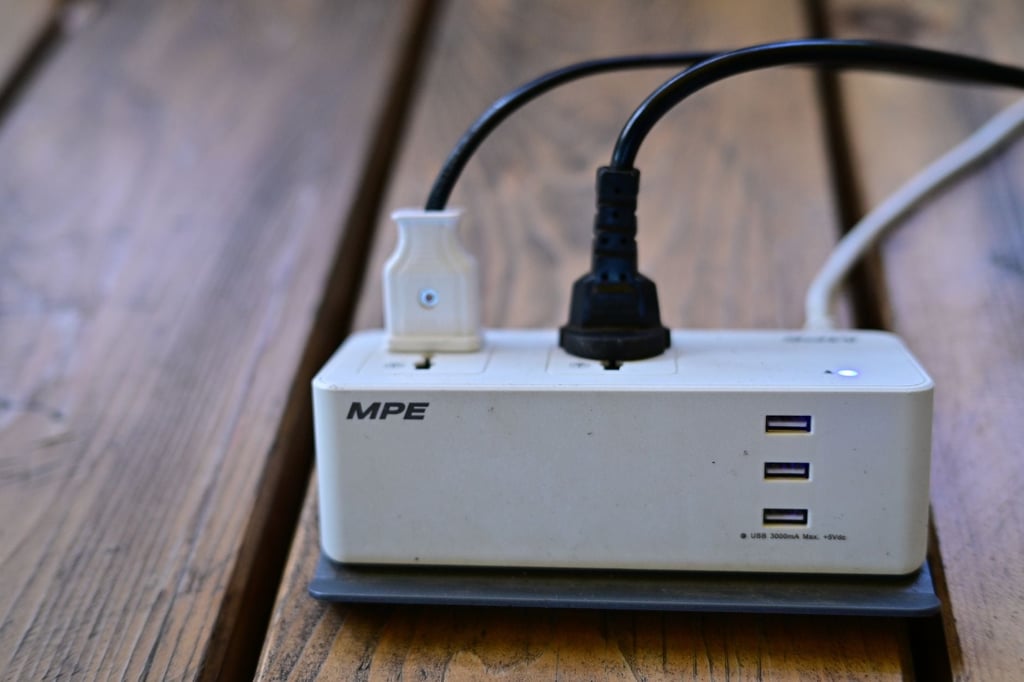
Did you know? Sri Lanka once used the same Type D and M sockets as India. Type G is now the official standard there, though older and rural buildings may still have Type D or M sockets, so it is worth checking with your hotel.
Nepal and Thailand are friendlier for Indian travellers. Nepal’s homes and hotels often have universal sockets, and Thai sockets commonly accept Type C plugs. Still, a three-pin Type D plug will not necessarily fit, so carry an adapter anyway.
What is the difference between an adapter and a voltage converter?
A plug adapter only changes the shape of the plug so it fits the foreign socket. It does nothing to the electricity. A voltage converter actually changes the voltage so that a device built for one voltage can run on another.
Most people need only the adapter, because phone, tablet and laptop chargers are generally dual-voltage. For a charger this is usually printed on the label as an input range such as 100-240V.
Will your chargers and gadgets work on foreign voltage?
- Phone, tablet and laptop chargers: read the input line on the label. If it says 100-240V, you only need a plug adapter, even for the USA at 120V or Japan at 100V.
- Hair dryers, straighteners and irons: heating appliances often draw high power and are frequently built for a single voltage. Check the label on the handle or near the cord. If it shows only 230V, it is not meant for 100-120V sockets, and a converter may be needed.
- Frequency: most modern electronics handle both 50Hz and 60Hz, though some items such as clocks may be affected.
If you are heading to the USA or Japan, it is usually simpler to use the hotel’s hair dryer or pack a dual-voltage one than to buy a heavy converter.
What should you pack to be safe?
- One adapter that matches your destination, bought before you leave so you are not paying airport prices.
- A second adapter or a multi-socket extension if you charge several devices at once. Hotels often have few sockets near the bed.
- Every charger label checked at home, not at the hotel.
- Your itinerary in mind: a trip with a stopover in a different country may need a second plug type.
Common Questions
Which adapter do I need for Dubai or the UAE?
The UAE uses Type G, the same three-pin rectangular style as the UK, at 230V and 50Hz. Your Indian charger will work with a Type G adapter if its label allows 230V.
Do I need a converter for the USA?
The USA runs on 120V at 60Hz. If your phone and laptop chargers are marked 100-240V, you only need a plug adapter. Single-voltage items such as many hair dryers may need a converter.
Is one universal adapter enough?
It can cover several plug shapes, but it only changes the plug. It does not change the voltage, so you still need to read the label of each device.
Do I need an adapter for Nepal?
Nepal has no single official standard. Type C is the most common, followed by Types D and M, and many places have universal sockets. An adapter is still a sensible backup.
Is Japan the same as the USA?
Both use Types A and B, but Japan’s standard voltage is 100V, lower than the USA’s 120V. Japan also splits between 50Hz in the east and 60Hz in the west.
What about Europe, is it all one plug?
Most of Europe uses Types C, E and F, and Type F sockets accept C, E and F plugs. There are exceptions: the UK, Ireland and Malta use Type G, Switzerland uses J, Denmark uses K and Italy mainly uses L.
Planning an international trip? Search flights on HappyFares, set a price alert for your dates, and add travel insurance when you book. Meera, our AI assistant, can help you compare options.
Standards, rules and fees change. Verify current specifics with the airline, the airport or the destination’s official sources before you travel.

