
Dry vegetarian snacks such as namkeen, roasted chana and packed biscuits are generally fine in cabin and checked bags, since the liquids rule applies to liquids, aerosols and gels. Air India states that ghee and pickles are allowed in both, but in cabin baggage they fall under the 100 ml liquids rule, and chilli pickle is allowed only in checked baggage.
Updated October 2026 · HappyFares

Every festival season, bags fill up with sweets and snacks meant for relatives. A little planning keeps them from being taken out at the security check.
Can you carry dry snacks like namkeen in cabin baggage?
In general, yes. Namkeen, bhujia, roasted makhana, chikki, biscuits and similar dry packaged snacks are solid foods, so the 100 ml rule for liquids does not apply to them. They go through the X-ray like any other item in your bag. Security staff may still ask you to take a large quantity out of the bag for a closer look, and they have the final say at screening.
Airlines generally let you carry a reasonable amount of your own food, though screening staff can refuse a quantity they consider excessive. That is a good rule of thumb on any airline: carry what a traveller would reasonably eat on the trip and put the bulk of your gifts in checked baggage.
Handy habits for dry snacks:
- Keep them in sealed packets or tight containers, so nothing spills in your bag.
- Pack them near the top of your cabin bag, so they are easy to take out if asked.
- Avoid very oily, loose snacks in the cabin bag, as they can leak and spoil other items.
What about jaggery and sweets?
Jaggery in solid blocks is a dry food, and I did not find any airline page that lists it as a restricted item. Treat it like any other packed sweet: wrap it well, and put it in checked baggage if you are carrying a lot. Soft or syrupy jaggery is another matter. If it is runny or pourable, it behaves like a gel, and the liquids rule would apply to it in your cabin bag.
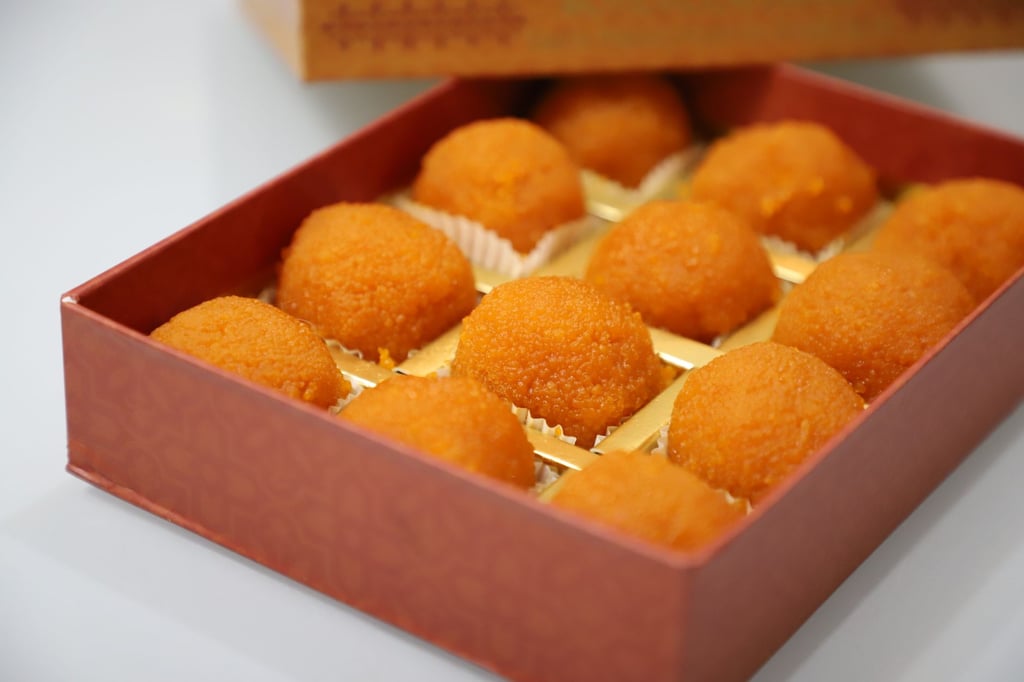
The same thinking applies to sweets that are soaked in syrup, such as gulab jamun or rasgulla, and to sweets made with a lot of ghee. If a sweet comes in syrup or is spreadable, it may be treated as a liquid or gel in the cabin, so a checked bag is usually the better place. Dry sweets like laddoo, barfi and peda are solid, though a lot of ghee can leave a stain on fabric. Wrap them in a box and then in a plastic bag.
How does the 100 ml liquids rule treat ghee and pickle?
This is where most passengers run into trouble. Air India’s restricted-items guidance covers both items:
- Ghee and cooking oil: allowed in cabin and checked baggage. In cabin baggage they fall under the rules for liquids, aerosols and gels. For checked baggage, the page puts the quantity at 5 kg or litres per passenger.
- Pickles: allowed in both cabin and checked baggage, except chilli pickle, which is allowed only in checked baggage.
- The liquids rule: each container must be 100 ml or less, and all containers must fit in a single transparent re-sealable bag of one litre. Containers larger than 100 ml are not accepted even if only partly filled.
In plain terms, a 250 ml jar of mango pickle should go into checked baggage, even if it is only half full. A small 50 ml sample jar, packed in the clear bag, is fine for the cabin on Air India.
Other airlines publish their own dangerous-goods and baggage pages, and the wording is not always identical. If you fly IndiGo, Akasa Air, Air India Express or SpiceJet, check that airline’s list as well.
How should you pack food gifts in checked baggage?
Checked baggage is where bulk food belongs. A few simple steps save a lot of mess.
- Seal jars with tape and put them inside two plastic bags, then wrap them in clothes in the middle of the suitcase.
- Keep ghee and pickle jars upright and well away from the edge of the bag.
- Check the weight. Food is dense, and the limit for your fare applies to the whole bag.
- Leave the original labels on packaged items so staff can see what they are.
Are there extra rules on international flights?
Yes. The country you land in decides what food may enter. Some destinations restrict dairy products, spices or nuts, and rules differ by country. That is separate from the security rules at the Indian airport. Before you fly abroad, read the destination’s customs and border guidance for food, and declare any food if the form asks.
Common Questions
Can I carry namkeen in hand baggage?
Generally yes, because it is a dry solid food. Screening staff may still ask you to take it out, and an unusually large quantity can be refused.
Is ghee allowed in a cabin bag?
Air India states ghee is allowed in cabin baggage, but under the liquids rule, so each container must be 100 ml or less and fit in the one-litre clear bag.
Can I carry pickle in checked baggage?
Yes. Air India lists pickles as allowed in checked baggage, and chilli pickle is allowed in checked baggage only.
Is there a limit on ghee in checked baggage?
Air India’s page puts the quantity at 5 kg or litres per passenger. Other airlines may state it differently, so check the one you fly.
Does jaggery count as a liquid?
Solid jaggery does not. Soft, runny jaggery can act like a gel, so keep it in checked baggage.
Can I carry food for a baby?
Baby food is usually permitted in reasonable quantities, but check your airline’s baggage page and expect it to be screened separately.
Heading home for the festival season with a suitcase of sweets? Search and compare flights on HappyFares, with zero convenience fee on domestic bookings, price alerts and Meera, our AI assistant, to help you find the right fare.
Security and baggage rules change, and screening staff have the final say. Verify current specifics with the airline, BCAS or the airport before you travel.

